The Machine That Can Tell Red from Green: AI, Consciousness, and What Makes a Person
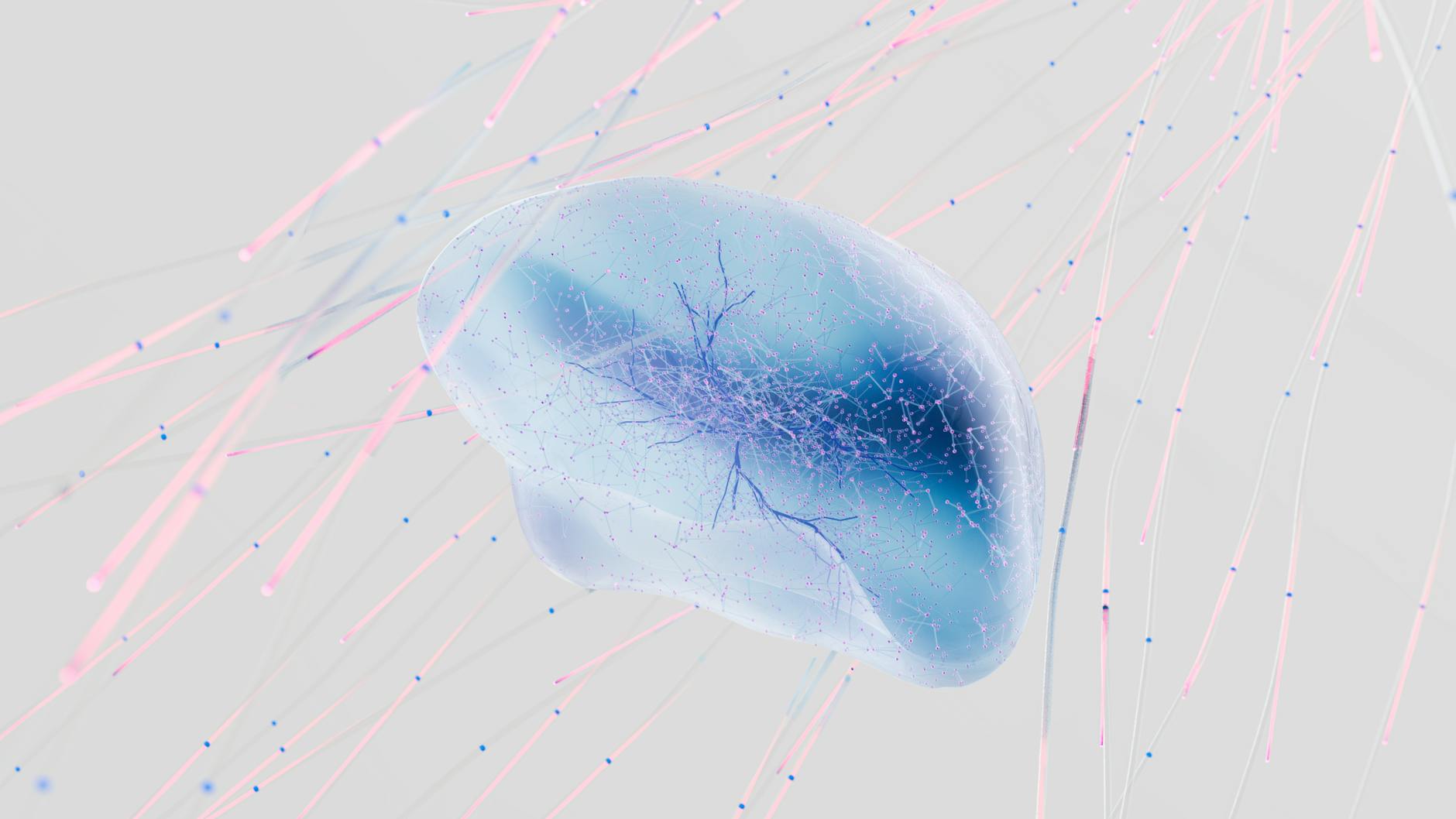
Point a camera at a red apple and today's artificial intelligence answers without hesitation: "a red apple." It reads wavelengths, draws boundaries learned from millions of images, and separates red from green, sometimes better than I can. So I find myself asking a question that no amount of accuracy seems to settle. Does the machine see red?
I am a neurologist, and the question has a familiar shape. Philosophers tell of Mary, a brilliant scientist who knows every physical fact about color but has lived her whole life in a black-and-white room. When she finally steps outside and sees a red rose, does she learn something new? Most people feel that she does. An AI, in a sense, is Mary in her room. It holds all the data about red. Whether the data comes with the feeling of red is not written anywhere in the data. You can memorize an entire cookbook and still never taste the soup.
Telling versus undergoing
Consciousness researchers separate the "easy" problems from the "hard" one. Sorting wavelengths, naming colors, acting on them: these are problems of function. Hard work, certainly, but the kind where you can trace circuits, measure signals and build models, one step at a time. The hard problem is different. After you have explained every function, the question "why is any of this accompanied by experience?" does not shrink at all. That stubborn non-shrinking is its true face.
A thermometer detects that a room is hot. Nobody thinks it suffers from the heat. Measuring warmth and being oppressed by it are different events. Today's AI is superb at the first. Whether there is anything at all of the second, nobody can see from the outside.
The man in the room
In 1980 the philosopher John Searle imagined a person who knows no Chinese sitting in a room with a thick rulebook. Slips of Chinese characters come in; he looks up which symbols to send back out. To those outside, the answers are perfect. Inside, he understands nothing. Shuffling symbols by rule, Searle argued, is not the same as grasping what they mean.
We have all stood briefly in that room: singing the chorus of a song in a language we do not speak, or saying a polite "thank you" in a foreign country by pure imitation. The other person assumes we know the language; our heads are empty. Producing the sounds is not living the words. Large language models, which predict the next word from vast amounts of human text, sharpen the puzzle. Some researchers have called them "stochastic parrots," fluent with form, not anchored in meaning.
The most capable calculator on earth can teach us, by contrast, that being a person was never about calculating.
What the science can and cannot say
The leading scientific theories give cautious, differing guidance. Giulio Tononi's integrated information theory asks how tightly a system's parts are woven into an irreducible whole. Most current AI pushes information through in one direction, like a conveyor belt, so by that yardstick its integration is low, and Tononi and Christof Koch have argued that a machine can behave like us and still be dark inside. Stanislas Dehaene's global workspace theory asks a different question: does information get broadcast across the whole system, the way a thought that reaches awareness is "heard" by the whole brain? Dehaene and colleagues suggest that a machine with such an architecture might one day approach some form of conscious processing, though today's systems do not have it.
The two theories differ, but they meet at one honest point: today's AI distinguishes red, and we have no good reason yet to say it experiences red. Whether that is impossible forever, neither theory is willing to declare. That is the truthful position, and I would rather stand in it than pretend to more.
Then what is a person?
The question turns into a mirror. If a machine can imitate every human function, what makes a human being human? The Catholic tradition never answered with a function. Scripture says we are made in God's image (Genesis 1:27), and that image is not a processing speed or a vocabulary. It is that each of us is called, loved and invited to respond. As the First Book of Samuel says, "Man looks at the outward appearance, but the Lord looks at the heart" (1 Sam 16:7).
There are two temptations here, pulling in opposite directions. One is to idolize the machine, to assume a heart behind fluent speech. Our minds are prone to this: anyone who has murmured "poor thing" at a robot vacuum bumping into a wall knows how readily we read minds into movement. The other temptation is to shrink the person into "just a wet computer." It is the "just" that I have refused throughout my work.
What the clinic taught me
More and more patients arrive with a smartphone in hand. One elderly gentleman told me, delighted, that the chatbot "understood everything I said and even comforted me." I smiled, and I also paused at how naturally he used the word understood. A mind that answers us, we instinctively trust to be someone. Between people, that instinct is the root of love. With a machine, it is worth stopping to ask.
I have cared for a woman, once a mother of many, who could no longer tell me her daughter's name or the day of the week. By any test score, a pocket calculator outperforms her. Yet when a hymn began, her eyes cleared, and at the touch of the anointing she smiled. A whole person was there. No exam could grade it. Her daughter, sitting beside her, looked at her not as one looks at a device whose performance has declined, but as one looks at the mother who once held her hand.
Human dignity does not rest on processing power. The person who has forgotten the most can still be more fully a person than the cleverest machine, because dignity comes from being loved, not from being capable. Perhaps that is the most unexpected gift artificial intelligence gives us: the best calculator ever built shows us, by contrast, that we were never persons because of our calculations.
These essays are personal reflection at the intersection of neuroscience and faith — not medical advice.


댓글
댓글 쓰기