The same prayer, the opposite hormone: on which God you are praying to
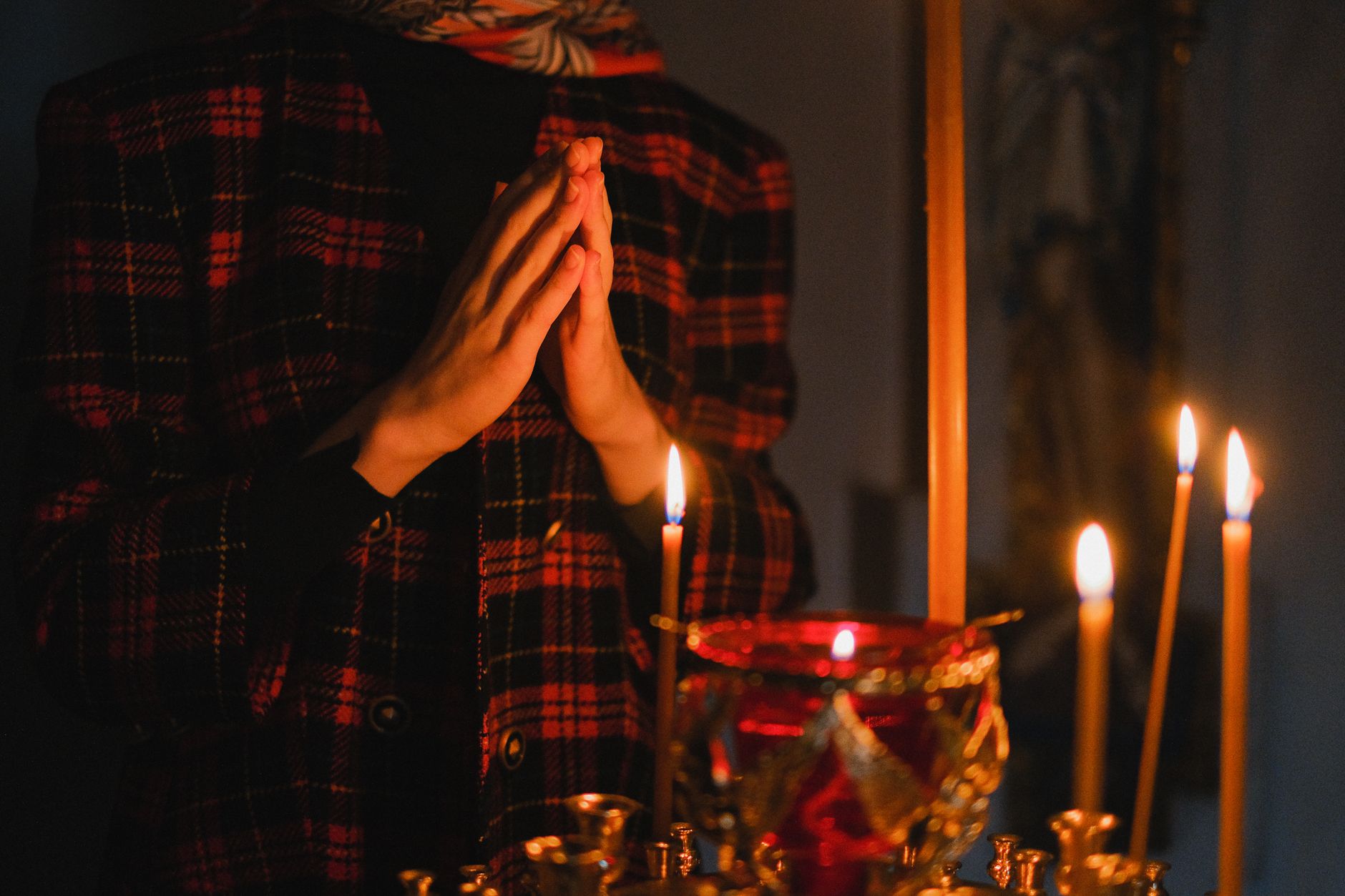
Two patients, on the same afternoon, with more or less the same problem. Both told me, without being asked, that they prayed every day.
The first woman said it the way you might mention that you walk in the mornings. When she talked about her prayer her shoulders came down an inch. The second woman said it with her jaw set. She prayed the way a person files an appeal — carefully, on time, in the correct form, aware that a failure of procedure might count against her. Her blood pressure that day was higher than it had been at any previous visit, and she apologized for it.
For most of my career I filed that difference under temperament. Some people are calm and some are not, and faith gets poured into whichever vessel is already there. I am no longer sure that is the whole of it. There is a small, awkward, occasionally overstated body of research suggesting that those two women were not only in different moods. They may have been in different physiologies.
The cardiologist they laughed at
In 1972 a young cardiologist at Harvard named Herbert Benson noticed that people who practiced Transcendental Meditation had measurably lower blood pressure, and made the professionally unwise decision to take it seriously. A cardiologist studying meditation, in that building, in that decade, was a punchline. He kept going anyway, and in 1975 published The Relaxation Response.
What he documented was not a mood. It was a coordinated bodily state: oxygen consumption falling by something like ten to twenty percent, respiratory rate and heart rate dropping, muscle tone releasing, the autonomic nervous system tipping toward parasympathetic dominance, cortisol coming down, alpha and theta rhythms rising. Benson's framing was that this is the precise mirror image of fight-or-flight — the emergency mode that saved our ancestors from predators and now idles all day in traffic and inboxes and hospital waiting rooms, quietly wearing people down.
Deep contemplative prayer, it turned out, is one of the most direct doors into that state. Not the only one. But a reliable one.
What the immune system seems to notice
The half-century since has been spent trying to follow that finding further in — into the immune system itself. Two lines are worth knowing about.
The first concerns natural killer cells, the lymphocytes that patrol for virus-infected and newly cancerous cells without waiting to be told. Studies of mindfulness-based stress reduction programs have reported meaningful increases in NK cell activity over an eight-week course, and comparisons of long-term contemplative practitioners with age-matched controls have tended in the same direction.
The second concerns chronic low-grade inflammation, which twenty-first-century medicine increasingly treats as the shared soil beneath atherosclerosis, diabetes, Alzheimer's disease, depression, and some cancers. Steve Cole's group at UCLA has looked at how contemplative practice shows up in the inflammatory gene expression of immune cells. Markers like IL-6, TNF-α, and CRP run lower in regular practitioners — and, in the comparisons that were designed to test it, lower than in people who simply rested for the same length of time. Thirty minutes lying quietly and thirty minutes of contemplative prayer do not appear to be the same event at the level of the cell.
There is even work on telomeres, the protective caps on our chromosomes that shorten as cells divide. Elissa Epel and Elizabeth Blackburn measured telomerase — the enzyme that restores them — in people who completed a three-month intensive retreat, and found activity roughly thirty percent above controls.
Now the part where I put my hands in my pockets
I want to be honest about what I have just told you, because this is a field where enthusiasm outruns evidence with some regularity.
Almost all of it is observational. Religious people, taken as a group, drink less, smoke less, sleep on a schedule, and sit down to eat with other human beings more often — and any one of those could carry a great deal of the effect. Retreat studies recruit volunteers who chose a three-month retreat, which is not a neutral population. Sample sizes are often small and replication is uneven. When Harold Koenig and colleagues at Duke assembled over three thousand studies in the Handbook of Religion and Health, the headline number — that people who participate regularly in religious life live on average some seven years longer — is real in the data and still not a number I would repeat to a patient as though it were a dose.
What survives the statistical scrubbing is more modest and more interesting: after controlling for the obvious lifestyle variables, something independent appears to remain. Not a miracle. A residue. Enough to keep looking.
But not all prayer
The finding I cannot stop thinking about is the one that ruins any attempt to prescribe this.
Koenig's thirty years of work suggest that prayer offered inside a genuine personal relationship — Christian contemplative prayer, Jewish mystical prayer, Sufi dhikr — carries the physiological signature. Prayer recited as a social duty, in the correct form, on time, does not. Same words. Different body.
And then the sharper one. Prayer addressed to God as love and mercy engages the parasympathetic system and lowers cortisol. Prayer addressed to God as an auditor with a file open — a punishing being, a figure to be placated — appears to do the opposite, raising cortisol, recruiting the sympathetic system. The shell is identical. The physiology runs backward.
The same words, and the opposite hormone. What you pray matters. So, apparently, does which God you believe is listening.
I find this humbling rather than triumphant, because it takes the question out of the laboratory and hands it back to theology. If a religion of fear is, in bodily terms, a chronic stressor — and a religion of love is closer to a recovery circuit — then how a person has been taught to picture God is not a private abstraction. It has a clinical trajectory. Every homily, every catechism class, every parent explaining to a frightened child why something bad happened, is setting a dial that the adrenal glands will eventually read.
I should say plainly what I am not saying. None of this proves anything about whether God exists, and I would not want it to. A skeptic can account for every measurement above without invoking anything beyond relaxation physiology, and that account is not foolish. It leaves one question sitting on the table, which I notice I cannot put down: why should this particular act — sustained, sincere address to Someone — turn out to be among the more reliable ways to open the body's deepest repair settings.
I have no argument to build on that. I have only an old sentence that keeps fitting the data better than I expect it to: that we were made for relationship, and that outside of it we begin, slowly and at the level of the cell, to dry out.
In the clinic I do not prescribe prayer. I prescribe what I was trained to prescribe, and I want my patients taking their medications. But when someone tells me, unprompted, that they pray every day, I have started asking a second question that I never used to ask.
Not how often. What it feels like when they do.
These essays are personal reflection at the intersection of neuroscience and faith — not medical advice.


댓글
댓글 쓰기