Six breaths a minute: what a rosary does to an anxious body
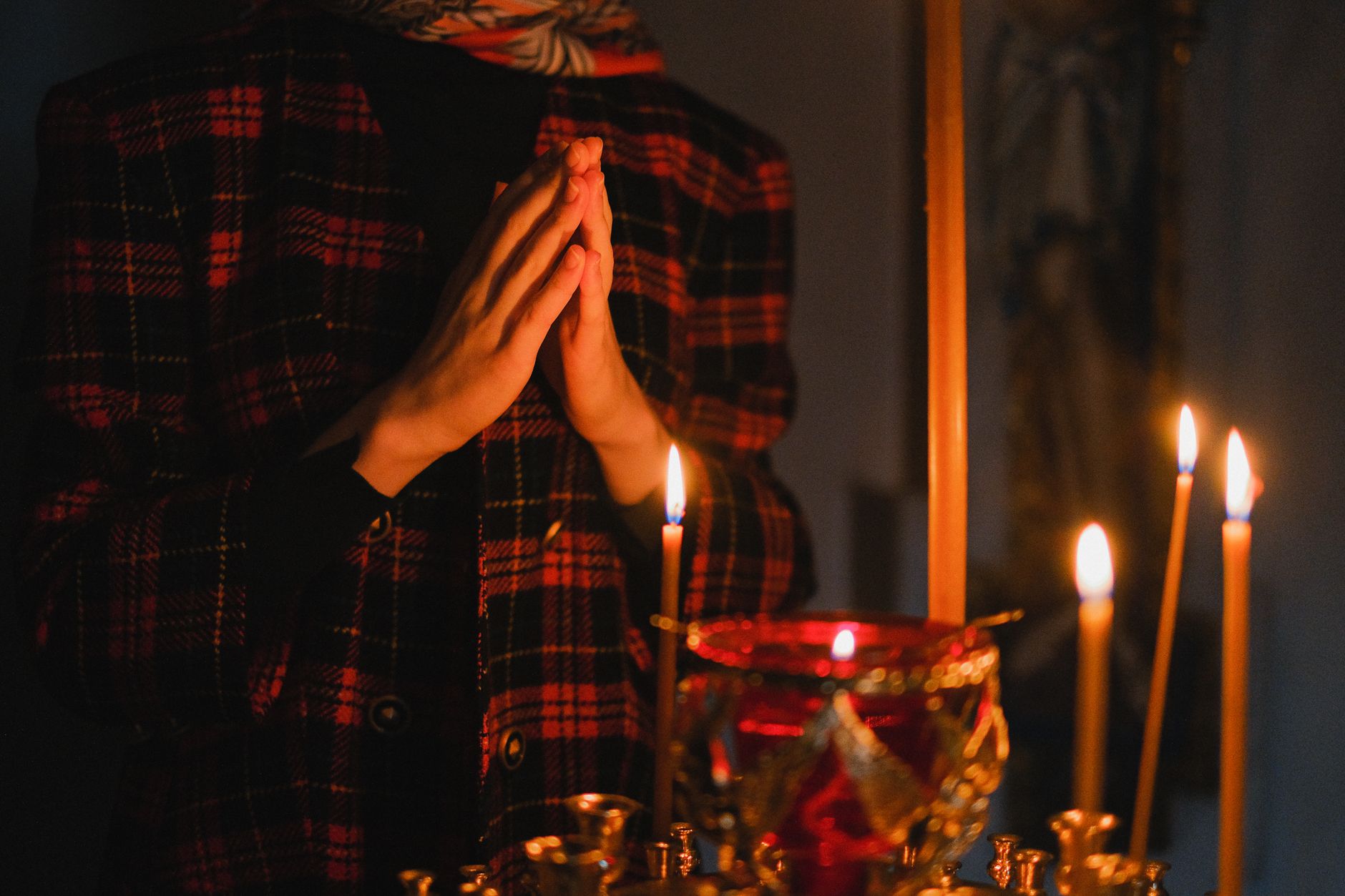
Suppose there is a rosary in your hand.
At first it feels awkward. You say the same prayer, and then say it again. Ten Hail Marys make a decade, and there are five decades. Somewhere around the twentieth repetition your reason begins to file a complaint. What is the point of this? If once, sincerely, would do, why fifty times?
To a modern ear tuned to efficiency, it sounds like pure waste. We were trained to make the point once, cut the redundancy, and treat a repeated sentence as laziness. Telling such a person to say the same prayer fifty times is nearly a provocation. And yet the secret of the rosary is hidden in exactly that inefficiency. The repetition is not trying to deliver meaning. It is trying to put to sleep, briefly, the part of us that weighs meaning.
Set the complaint down and move the beads. Something shifts. As the words grow familiar, the burden of parsing them drops away and rhythm rises in its place. One phrase on the breath in, the next on the breath out. The finger moves to the next bead. You stop chasing the words and begin to rest on top of them. The busy mind slows by a beat.
This is not merely a matter of mood. While it happens, something is measurably happening in your body.
In 2001 an Italian group led by Luciano Bernardi carried this scene into a laboratory. They had healthy volunteers recite the rosary in Latin while recording their breathing, heart rate, and blood pressure. The findings appeared in the BMJ. Prayed at its natural pace, the rosary slowed respiration to roughly six breaths per minute — almost exactly the rate produced by a yoga mantra. And that slow breathing brought the cardiovascular rhythms into step with one another and sharpened the reflex sensitivity that regulates blood pressure.
It is worth pausing on what they actually saw. Even at rest, heart rate and blood pressure drift up and down in a very slow wave of their own. Slow the breath toward the tempo of that wave, and breath, heart, and pressure stop running out of phase and begin to move together — several rhythms taking hold of one another’s hands. When they overlap like that, the body’s automatic blood-pressure reflex works more sensitively and more efficiently. A Hail Mary in Latin, said at an unhurried pace, drops the breath near that tempo all by itself.
Anxiety runs the other way. Breathing quickens and grows shallow; the sympathetic system stands on edge. Six breaths a minute cuts against that current. For centuries people called the state that followed the rosary peace. The researchers only drew it as a graph.
The tradition never separated meaning from physiology. We are only now learning why the monotonous turning of a bead settled people so thoroughly.
Anxiety resembles a body with its foot on the accelerator. The heart says run, the breath comes in short gasps, the whole system readies itself to flee — though there is nowhere to flee to and nothing to fight. Telling such a person to calm down helps almost not at all; the foot will not obey. But a long exhalation is one of the few levers that actually reaches the engine. As the breath goes slowly out, the vagus nerve quietly presses the brake. Where the will could not reach, breathing enters by the back door and turns the handle. The rosary knocks on that door fifty times.
Why the exhalation in particular? Breathing in and breathing out are handled by different hands. During inhalation the heart speeds slightly; during exhalation it slows again, and it is in that exhaling phase that the vagus exerts its influence. Lengthen the out-breath and you lengthen the time the brake is held down. The Hail Mary happens to fit this physiology: speaking a phrase pushes air outward, and the length of the prayer becomes the length of the braking. The people who shaped these prayers could not have known the mechanism. They only knew, in their bodies, that it should be said slowly — and the answer was already inside the slowness.
None of which makes the rosary magic. Any prayer repeated at that tempo will carry you to a similar place: the Jesus Prayer of the Eastern Church, or simply counting the breath. In the 1970s the cardiologist Herbert Benson distilled the common relaxation response out of repetitive prayer and meditation across several traditions. The power of the rosary lies not in magic but in structure — slowly, regularly, repeatedly. What tradition added was to tie a direction to that structure: while the body settles, the mind faces one way.
And the hands must not be left out. A rosary gives you something to turn. An anxious mind will not stay in one place; it jumps from this worry to that one. To such a mind each bead becomes a stepping stone across a stream. One bead, one prayer; the next bead, the next prayer. While the fingertip finds the next stone, the mind pauses on it. Hand a crying child something to hold and the crying often stops. Give the wandering mind something to grip and it grows noticeably better behaved. It is no accident that the old instruments of devotion are all objects you hold.
In the clinic I sometimes suggest to an anxious patient that they slow their breathing to six a minute. Put as a number, it usually lands as bewilderment. If I say, breathe in for a count of ten and out for a count of ten, the counting itself becomes the new worry. Am I doing it right? Too fast? What if this makes the breathlessness worse? The homework given to produce relaxation turns into an examination.
For a patient with faith there is another road. Try one decade of the rosary, slower than usual. A few days later one of them told me that trying to count her breath had made her more anxious, but that when she said the Hail Mary slowly, her breathing slowed on its own. The meaning had taken the breathing along with it. When we count, the mind stands guard over itself; when we lean into a familiar prayer, the guard leaves his post.
I thought about that for a long time. The same woman, in the same room, breathing at the same slow rate — and one version became a test while the other became rest. The only difference was where her attention had gone. To relax the body you must first lead away the eye that watches the body. The old prayers seem to have known this. Put a single familiar line in someone’s hand, and the mind that had been standing guard goes obediently to sit on top of it.
One misunderstanding deserves a word. Repetitive prayer is sometimes taken to be the emptying of the head. But what the tradition aimed at was not an empty mind. Quieting the noise and hollowing out the room are different things — as different as tidying a cluttered room and demolishing it. What subsides across fifty Hail Marys is not the mind itself but the racket of weighing and calculating. What remains where the racket was is not a blank but a direction. Something like a low voice audible only after the noise clears.
In my clinic I often watch the fingertips of elderly patients who have turned a rosary all their lives. The beads are worn smooth, and their hands go on moving from one to the next even mid-conversation. However agitated they are, when those fingers touch the beads the grain of the conversation slows by a beat. Each time I see it, I think of the small footpath a lifetime of repetition has worn into that body — a path where, with no effort at all, the breath slows the moment a fingertip meets a bead. Somewhere medication struggles to reach, an old habit has quietly arrived already.
So when you next pick up a rosary, consider that two things happen at once. The lips repeat an old sentence, and the body follows that rhythm down to six breaths a minute. Meaning and physiology are threaded on the same string.
Breathe in once more, slowly. Then move to the next bead.
These essays are personal reflection at the intersection of neuroscience and faith — not medical advice.


댓글
댓글 쓰기