The shovel and the chicken coop: what split-brain patients taught me about my own certainty
A woman in my clinic last month asked me a fair question. I had switched her from one preventive medication to another, and she wanted to know why. I told her: the first one was blunting her appetite, the second has better evidence in patients with her sleep pattern, and it comes in a dose she can take at night. Three reasons, delivered smoothly, in the confident voice patients like to hear from a specialist. She nodded and left satisfied.
Driving home, I found myself wondering whether those were actually my reasons. Something in me had decided on that drug in the first thirty seconds of the visit — before the sleep question, before the dosing. The three reasons were all true. But had I reasoned my way to the choice, or made the choice and then, fluently and in good faith, assembled the reasons afterward?
I wonder about this because of a set of experiments I have never been able to shake.
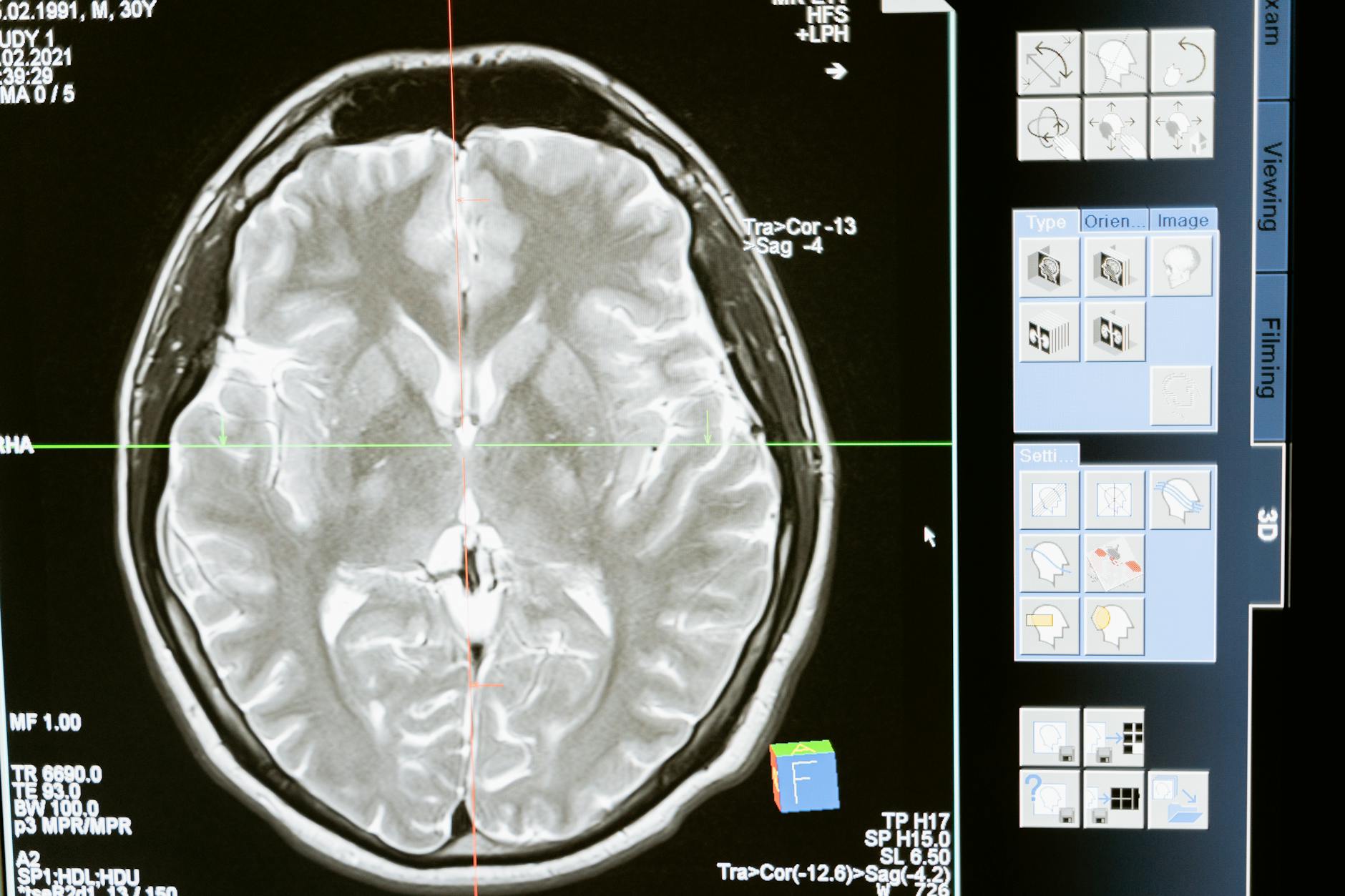
In the middle of the last century, some patients with severe epilepsy underwent an operation that now sounds barbaric and was, at the time, a mercy. When seizures spread relentlessly from one hemisphere to the other, surgeons cut the corpus callosum, the great bridge of fibers joining the two halves of the brain. Seizures stopped spreading. Patients walked out and, to all appearances, were themselves. Roger Sperry and Michael Gazzaniga then designed experiments delicate enough to reveal what had quietly changed.
You need one piece of anatomy to follow what happened. What falls in your left visual field goes to your right hemisphere; what falls in your right visual field goes to your left. And speech — the ability to say what you know — usually lives in the left. In a person whose bridge has been cut, the left hemisphere cannot see what the right hemisphere sees, and the right hemisphere cannot speak.
So Gazzaniga showed one such patient two images at once. To the left hemisphere, a chicken claw. To the right hemisphere, a snow-covered winter scene. Then he laid out picture cards and asked the man to point to what matched, using both hands. The right hand, run by the left hemisphere, chose a chicken. Sensible. The left hand, run by the right hemisphere, chose a snow shovel. Also sensible — that hemisphere had seen the snow.
Then came the question: why did you pick the shovel?
The hemisphere that answers is the left one, and the left one never saw any snow. The honest answer was "I have no idea." Instead the man replied, without a flicker of hesitation, that you need a shovel to clean out the chicken shed. He was not lying. He was not hedging. He had invented a reason on the spot, without any sense that he was inventing, and he believed it completely.
Gazzaniga gave the machinery behind that answer a name: the interpreter. It sits in the left hemisphere, watching what we do and what our bodies feel, and it weaves everything into a story that hangs together. Its virtue is coherence. Its flaw is that it does not fall silent when it doesn't know. It fills the gap with something plausible, hands us the result, and we experience that result not as a guess but as self-knowledge — as I know why I did that.
What unsettles me is that this is not a peculiarity of a few operated patients. They only made visible, under laboratory conditions, something that runs in all of us all the time. A whole literature in psychology since has found people confidently explaining choices whose real causes they could not possibly have known. When any of us says why we love the person we love, why we voted as we voted, why we believe what we believe — none of us can reliably sort which part of the answer is cause and which part is a story written afterward.
It would be easy to march this straight into the argument about God, and people march it both ways. One side says: there, you see, religious belief is just another story the brain tells itself. The other side declines to look at the finding at all. Neither is honest.
The honest reading is narrower and, I think, much heavier. The interpreter does not adjudicate any particular belief. It says nothing about whether God exists. What it tells us is general: the fact that we feel certain, and can give reasons fluently, is not evidence that we are right. That verdict falls on everyone standing in the room. The atheist laying out the tidy logic of his unbelief and the convert telling the seamless story of the night everything changed are both, in this respect, in the same position. Smoothness is not truth. The storyteller works the same shift in both skulls.
Strong feeling, smooth explanation, and total certainty feel like signs that the mind has met the truth. But the storyteller inside produces all three just as readily when it has no idea what happened.
I should add a caution, since I am asking you to take a finding seriously. "The interpreter" is a name for a pattern, not an organ anyone has ever held. Split-brain research involved a small number of patients, and researchers still argue about how cleanly the two hemispheres are divided in these people. The chicken-and-shovel moment is not a law of nature. It is a window — but what it shows through that window, ordinary experiments on ordinary brains keep confirming.
This did not take my faith away. It changed the grip. I used to think of belief as a case I had assembled, and of doubt as a gap in the case. Now I suspect the case was always partly a story, written by the same fluent voice that told that woman why I changed her medication. What remains is not the airtight argument. What remains is what does not depend on my being a reliable narrator of my own soul — the fact that I keep showing up, and that I keep being met.
Paul seems to have known something of this. He wrote to the Corinthians that he did not even judge himself; he was aware of nothing against himself, but that did not make him innocent, for the one who judges him is the Lord (1 Corinthians 4:3–4). That is not false modesty. That is a man who has noticed that the inner witness is not impartial. It is also, I think, why the tradition built practices around distrusting our own account of ourselves — the examination of conscience, confession spoken aloud to someone who is not us, spiritual direction. Every one of them puts a second pair of ears between me and my story.
The old wisdom had a plainer word for this posture, and it did not require an MRI scanner to arrive at it. It called it humility.
The man in the experiment went home that day certain he had explained himself. He never learned what his left hand had seen.
These essays are personal reflection at the intersection of neuroscience and faith — not medical advice.


댓글
댓글 쓰기