Why a brain doctor believes in God
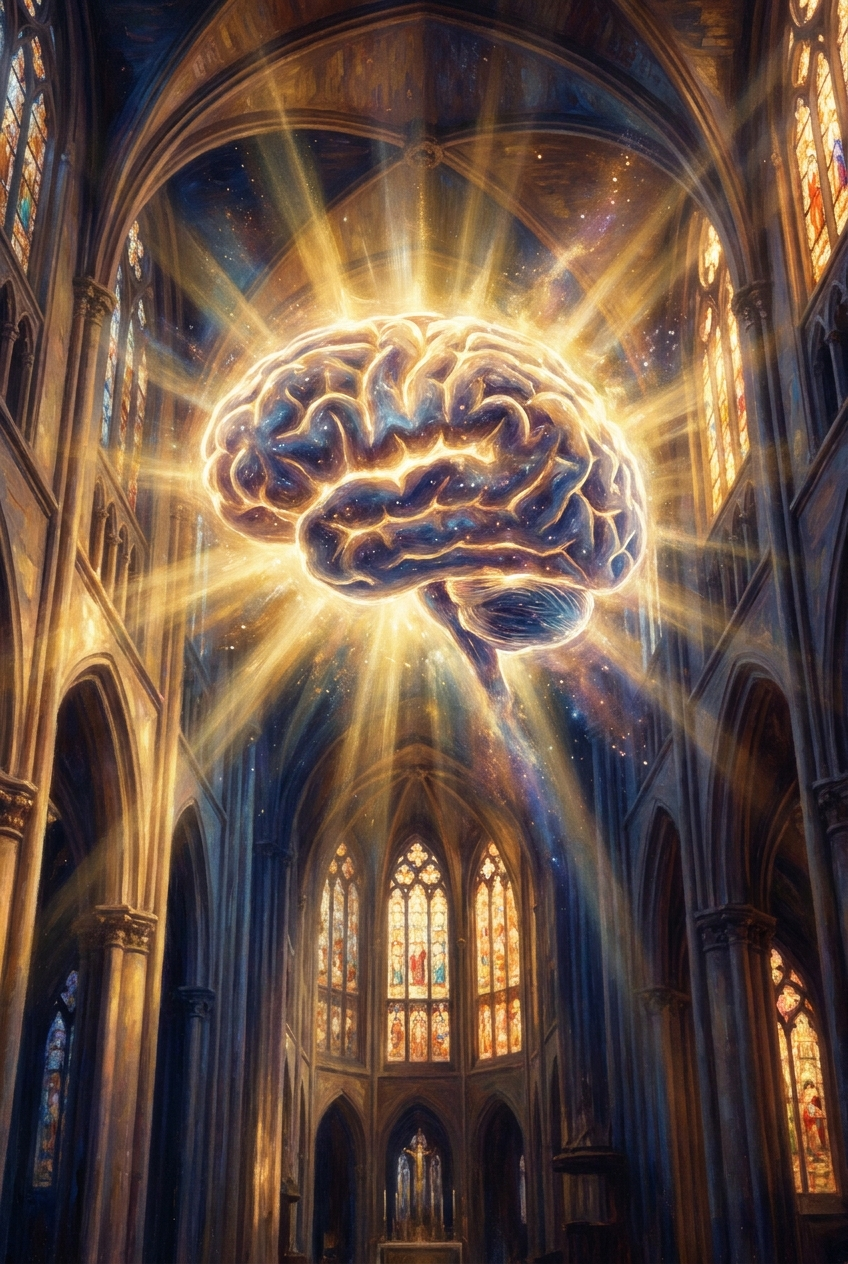
I was born into a Catholic family. When I reach back for my earliest memories, the first thing I find is a church — the particular smell of incense on Sunday mornings, the thin thread of smoke rising from the censer, colored light falling through stained glass onto my knees during Mass. The same people, in the same seats, at the same hour. I grew up inside that.
So the God of my childhood was not a great and distant being. He was someone who sat at the family table, in the empty chair beside us. A friend, part of the household.
Then adolescence arrived, and with it, for the first time, doubt. Is he really there? Or do I just believe it because the adults told me to? And yet, even in the middle of that confusion, I talked to him almost every day. Not grand prayers — more like complaints to a friend. Today was hard. Why am I like this? He was the oldest, and most tight-lipped, friend I had.
At twenty, I entered medical school. And there I met my first deep fracture.
I still remember the day I first held a human brain in the anatomy lab. I had assumed that something housed inside so hard a skull would itself be hard. It was surprisingly soft. That pinkish-gray mass, about 1.4 kilograms, had held one person's entire lifetime of memory and love and grief — and I could barely believe it.
But in the lecture hall the picture was different. Physiology taught me how neurotransmitters are released at the synapse. The textbooks explained that the trembling we call love is the work of dopamine and oxytocin; that sadness is a shortage of serotonin; that what we had called the soul is neurons firing in certain patterns. Everything measured, everything reduced to molecules and circuits. On no page did God appear.
I was shaken between the two. For a long time I spoke two languages. In the hospital, the language of neuroscience; in the church, the language of faith. Each pretended not to know the other, and I went back and forth between them like a man crossing between two countries.
After my training, I became a neurologist. Now I sit every day with patients and their pain — headache, dizziness, stroke, epilepsy, and the slow diseases that erase a person's memory and character one thread at a time. I have held a patient's hand and watched a spot the size of a fingernail on an MRI rewrite an entire life.
And then something strange happened. The more I knew, the more I was looking for God again.
At first it felt like a contradiction. Shouldn't mystery shrink as knowledge grows? But the opposite was true. Look more deeply into one region of the brain and a stranger, less knowable mystery opens up behind it. We actually understand less than one percent of the human brain — that half-joke neuroscientists trade among themselves grew truer to me, and as it did, that old childhood friend drew close again.
The man I am now wakes each morning and feels that the simple fact of getting to live one more day inside this brain is an enormous gift. The roughly 86 billion neurons and 600 trillion synapses of that pinkish tissue — and whoever set consciousness and love and meaning inside those circuits — receive, every day, a small greeting from me: Thank you for lending me this brain again today.
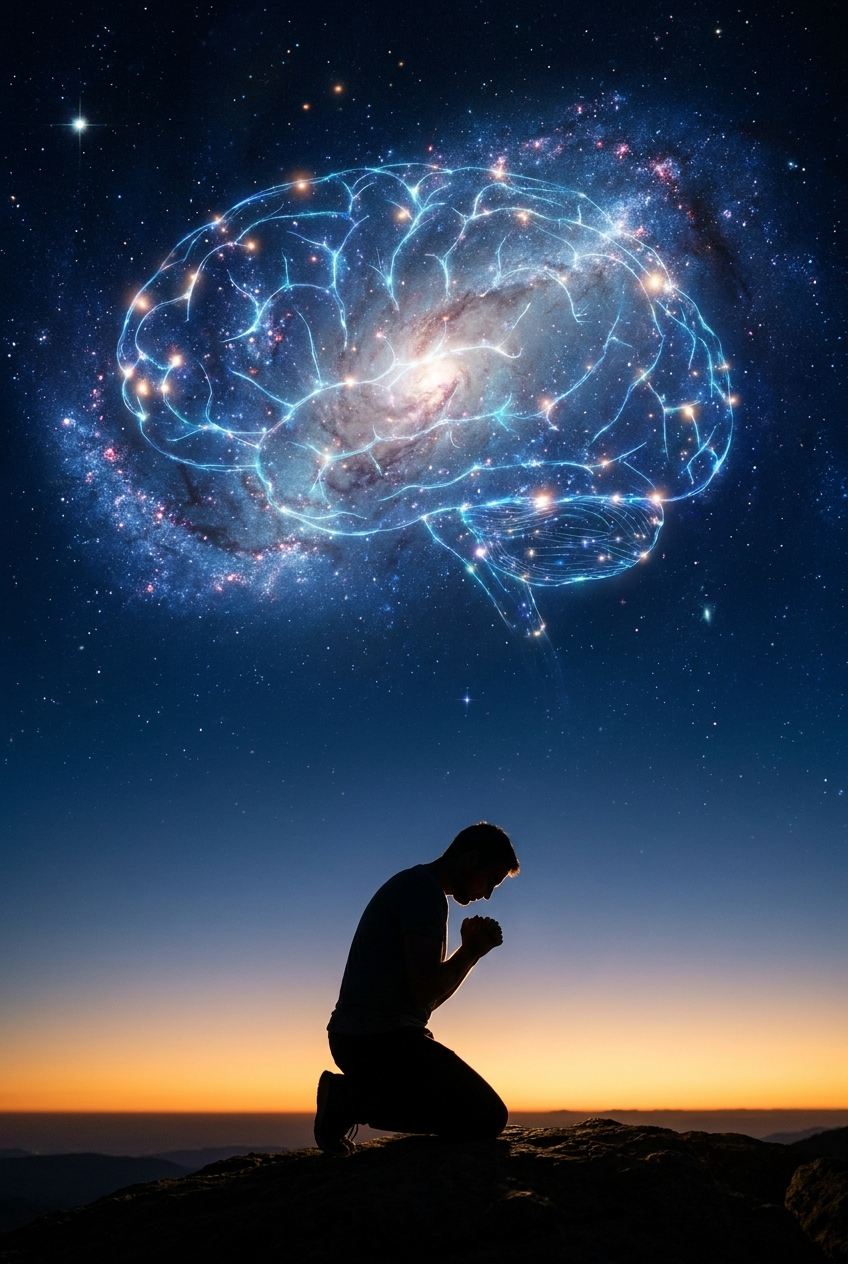
There is one image of God I love most. He is not the one who stands in front of me, pointing the way with his finger. He is behind me. Like a back-hug. Even in the moments I don't notice, he holds me quietly with both arms. When I feel helpless before a patient's pain, when I watch beside someone's last breath, when the morning light on the way to work suddenly catches in my chest — he has always been there, at my back. Not once has he left.
I don't write any of this to prove anything. A neurologist knows better than most how easily the brain deceives itself. But I also know this: the science that explains the mechanism has never, for me, explained away the meaning. Dopamine explains how I love. It does not tell me why love should matter at all — and it never will.
So I keep both languages. And more and more, I suspect they are describing the same thing from two sides.
That is what this blog is about — the place where the brain meets the sacred, written by someone who spends his days inside real skulls and MRIs, and his evenings still talking to that oldest friend.
Welcome to Neurotheology Notes.
This reflection is drawn from my book, The God Neuroscience Found — available on Amazon. If it resonated, the book goes much deeper, and I'd be glad to have you along.
Next post: The back-hug God — what neurology taught me about grace.


댓글
댓글 쓰기