86 billion neurons and the weight of a soul
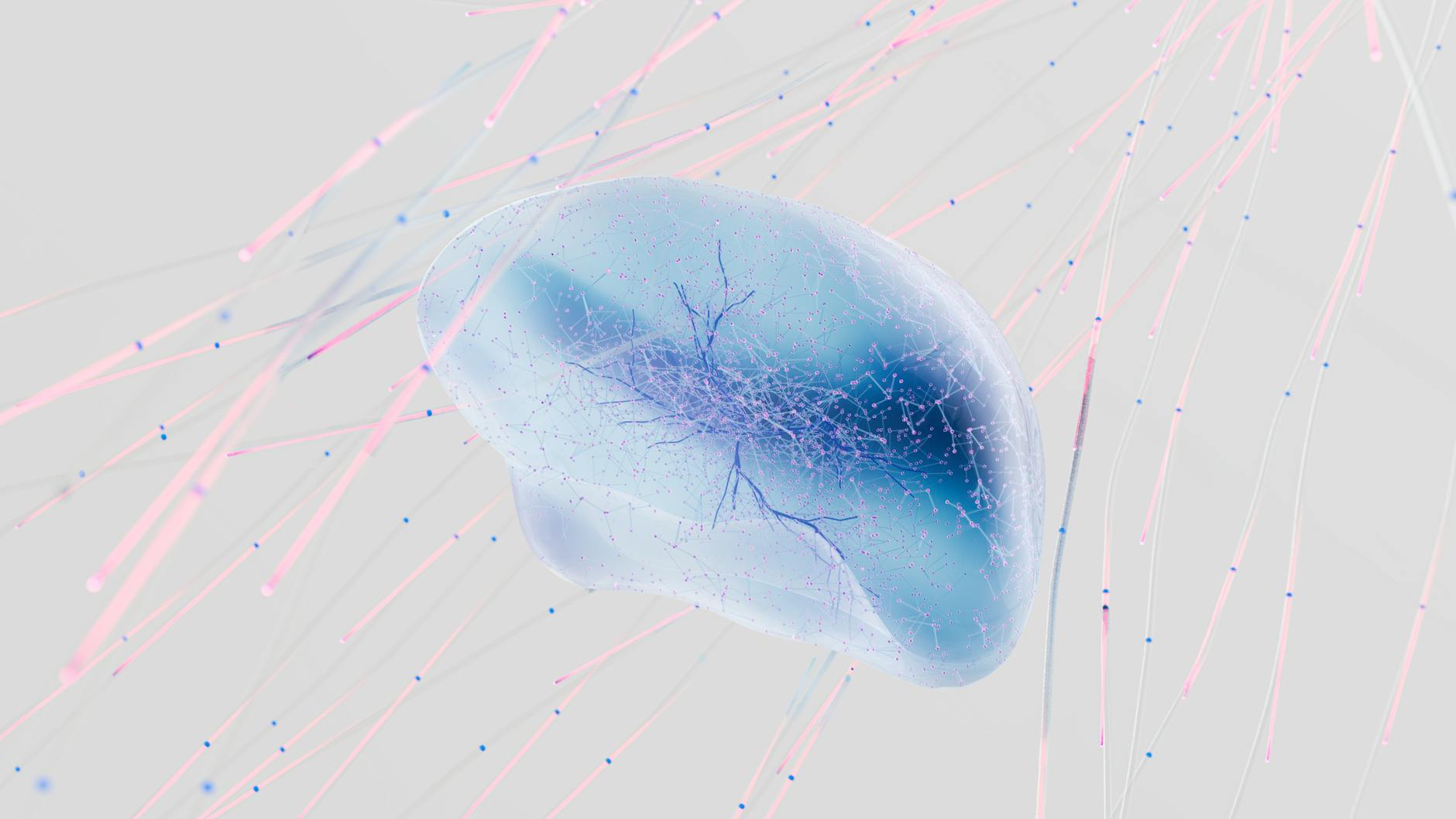
The first time I held a human brain, in the anatomy lab at twenty, I was startled by how soft it was. I had imagined that something kept inside so hard a skull would itself be hard. Instead it was tender, yielding, almost fragile — about 1.4 kilograms of pinkish-gray tissue resting in my two hands.
And that tissue had once held an entire human being.
Let me give you the numbers, because they never stop astonishing me. Roughly 86 billion neurons. Each one connected to thousands of others, for something on the order of 600 trillion synapses. If you counted those connections one per second, you would not finish in your lifetime, or your grandchildren's. All of it folded into a space smaller than the bowl you eat breakfast from, running on about the power of a dim light bulb.
Somewhere in that quiet electrochemical storm is your mother's face. The taste of a food you loved as a child. The particular grief of a loss you have never told anyone about. Your sense of right and wrong. Your feeling, right now, of being a single continuous you reading these words.
A person's whole life — every love, every fear, every prayer — fits inside a soft handful of tissue. That is either the most deflating fact in the world, or the most staggering. I have come to believe it is the second.
Some of my colleagues look at those same numbers and conclude that the soul is a story we tell ourselves — that if love is a pattern of firing, then love is only a pattern of firing. I understand the logic. But it has always seemed to me to skip a question it should be trembling before: how does a lump of matter come to care? How does tissue fall in love, or forgive, or kneel?
Explaining the mechanism of something does not explain it away. We can describe, in exquisite detail, the physics of a cathedral's stone — and none of that touches why it makes people weep. The brain is like that for me. Knowing the circuitry of memory has never once made a patient's fading memory less holy to watch.
So every morning I wake up and, before anything else, feel the plain weight of the gift: that I get to spend one more day inside this astonishing organ — the 86 billion, the 600 trillion, the soft handful that somehow became a self. I send a small greeting to whoever wove consciousness and love and meaning into that circuitry: thank you for lending me this brain again today.
The weight of a soul, it turns out, is about 1.4 kilograms. And I do not think that number makes it smaller. I think it makes the miracle more precise.
This reflection is drawn from my book, The God Neuroscience Found — available on Amazon. If it resonated, the book goes much deeper, and I'd be glad to have you along.
Next post: Love is dopamine and oxytocin — and still a miracle.


댓글
댓글 쓰기